Asbestos waste disposal Canberra: what a householder needs to know
By Artigellence ·
In Canberra, asbestos waste is not a do-it-yourself disposal job. The law requires a licensed removalist to take asbestos out of a house, unless the removal is "incidental to minor or routine maintenance work, or other minor work, at the premises" (the regulation's wording, quoted below), and the waste then has to go to a site authorised to accept it, never into your bins. Removing asbestos without the licence carries a maximum penalty of 30 penalty units under the ACT's Dangerous Substances (General) Regulation.
Call (02) 5114 6762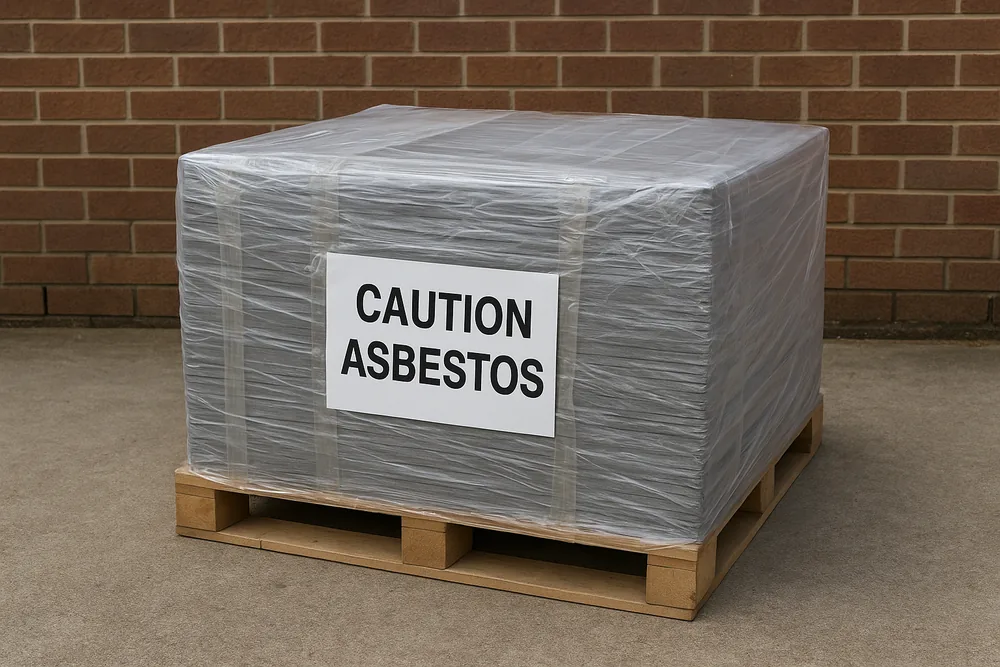
Disposal starts with who removes it
ACT City Services states that the law requires you to engage a licensed asbestos removalist to remove asbestos from your house or business. The regulation has one exception to that requirement, quoted below. That matters for disposal because the waste only exists once the material has been taken out, and the person who takes it out is the person who bags it, labels it and moves it on. So work out who is doing the removal before you arrange anywhere for the waste to go.
The penalty gives a sense of how seriously the rule is meant. The ACT's Dangerous Substances (General) Regulation 2004 says a person must not remove asbestos or asbestos containing material from premises unless they are a licensed removalist, with a maximum penalty of 30 penalty units. The same provision is described as a strict liability offence. The same part of the regulation sets out one exception: it says this part "does not apply to premises if the removal of asbestos or asbestos containing material is incidental to minor or routine maintenance work, or other minor work, at the premises." This page does not say what counts as minor work, so check the regulation itself to see whether your job falls inside or outside that exception.
Small jobs are not automatically exempt. WorkSafe ACT notes that the territory's rules require all removal to be done by a licensed removalist, dropping the exception found in the national model regulations for non-friable work not exceeding 10 square metres. That rule is subject to the minor-work exception quoted above. Whether a single fibro patch you were planning to deal with on a weekend counts as minor work under that exception is for you to check in the regulation, not for this page to decide.
Which licence the removalist needs
WorkSafe ACT explains that a Class A licence covers all types of asbestos, and that in the ACT only a Class A holder can remove friable asbestos. A Class B holder can only remove non-friable material. Fibro sheeting is the common household example of non-friable material, since WorkSafe ACT lists asbestos cement (fibro) as bonded material of that kind.
Before you sign anything, check the removalist against the WorkSafe ACT Public Register, which is where licensed assessors and removalists authorised for ACT work are listed.
Where the waste is allowed to go
WorkSafe ACT's guidance note on transporting asbestos waste says material that may be contaminated with respirable fibres must be taken to a disposal site authorised to accept it, as soon as practicable. It cannot sit in a trailer for a fortnight while you wait for a convenient weekend.
The same note says this kind of waste must not be transported across the ACT border unless a controlled waste consignment authorisation covers it.
How the waste is contained is also set out. The guidance note points to the How to Safely Remove Asbestos Code of Practice for the selection, filling, labelling and decontamination of waste containers such as asbestos waste bags or drums. ACT City Services adds a plain instruction for households: do not put asbestos in recycling, garden waste or general waste bins.
Houses covered by the loose fill insulation scheme have their own rule. The ACT Government says waste from those properties, including demolition waste, soil and structures, must go to a dedicated ACT NoWaste Facility, and that no interstate disposal is permitted.
If you are not sure what you have found
The ACT Government's advice is to not touch or move material you suspect is asbestos. Instead, call a licensed asbestos assessor, who can confirm whether it is asbestos and tell you what to do next.
This applies before renovations too. WorkSafe ACT points out that residential premises are not required to have asbestos registers, so a licensed assessor should survey before demolition or refurbishment to find out whether asbestos is present. Knowing what is in the walls before the first cut is far cheaper than discovering it in a skip bin afterwards.
Artigellence is the marketing business that operates this site and writes its articles. It does not carry out the work described.
Thanks — we have your enquiry. Someone will be in touch shortly. Prefer to talk now? Call (02) 5114 6762.
Last reviewed · Updated · First published